
Here's something people don't tell you about starting a candle business: you have to smell a lot of things. Constantly. Over and over. And when your brain is wired the way mine is, hello, AuDHD: that seemingly simple task can become an absolute nightmare.
I want to talk about why I don't use fragrance oils in my candles. Not the polished, marketing-friendly version. The real one. The one where my sensory system basically staged a revolt and my magically-inclined customers called me out on something I couldn't even explain. But in the end - I can't complain at the results.
My Brain Has Opinions About Smells
Let me back up a bit.
If you're neurodivergent, you might already know that sensory processing works... differently for us. Some of us are sensory seekers. Some of us are sensory avoidant. Many of us are both, depending on the day, the stimulus, and whether Mercury is in retrograde (kidding: mostly).
For me, scent is one of those things that can either be deeply grounding or completely overwhelming. There's not a lot of middle ground. A scent I love can anchor me, help me focus, make a ritual feel real. A scent that's "off" in some way I can't articulate? It will absolutely wreck my concentration, prevent concentration, trigger a migraine, and leave me feeling vaguely nauseous for hours.
When I started making candles, I thought I’d maybe use essential oils - because I wanted something natural right? I joined some candle making groups on Facebook and they were quick to tell me that essential oils weren’t safe in candles. When I mentioned herbs? They went on about how much of a safety risk they were in candles.
It felt like everyone had their one "set way" of doing things, and if you strayed from that, you were doing it wrong. The process accepted by most candle makers is: Melt the wax to a specific temperature, add "scent oils," stir till it reaches a specific lower pour temperature, then pour directly into the final vessel. There is much debate over the size, shape, material and number of wicks, how to secure wicks, and what temperatures to aim for when you are adding oil and pouring the candles. It's been compared to baking where the slightest variation in these variables can lead to drastically different results.
I realized I needed to pay attention to the valid safety concerns they had also my own concerns about their process—specifically, all those chemicals. They were rampant in several stages of the process between the scent oils and wick securing mechanisms. I knew other people had to be struggling with the same sensory issues I was, and I was determined to find a way to mitigate things like fire risks while keeping my infusion process as natural as possible.
I'll be honest - I wanted candles that to me were magically sound. For me, magic is not the generic witchcraft you see everywhere. It's more the Egyptian concept of Heka: Doing things the right way, with an exacting attention to detail, with a scientific mindset of experimentation, perfecting skills and being genuine. Magic to me is spiritual, but it is also grounded in the very real world. Everything I do to make my candles magical in actual practice is things I could describe to a non-magical individual and it would simply be seen as using real ingredients and perfecting my products as I learn more about them.
When I started making candles, I assumed I'd just... buy essential oils and process them the way everyone else worked with fragrance oils. That's what many candlemakers do, right? You find a supplier, pick your scents, pour your candles, done. Simple.
It was not simple.
The Chemical Fuzziness Problem
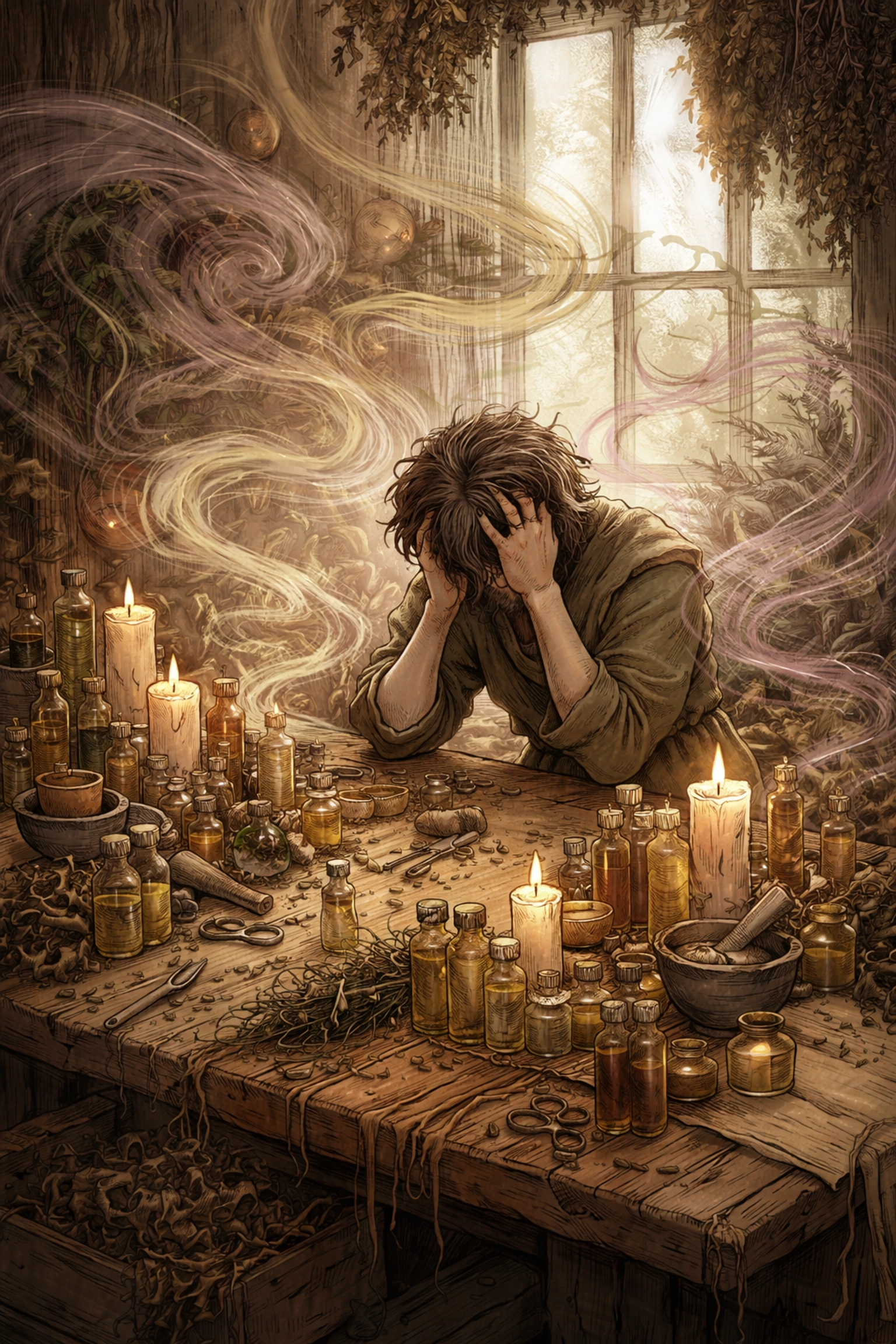
As I was building up my gear to begin making candles, I ended up with several boxes full of "scent oils" from someone de-stashing their gear. She had bought traditional, high quality scent oils - meant for the heavily scented Yankee Candle type of scent throw. The first time I opened a bottle of fragrance oil marketed as "dragon's blood," I genuinely thought something was wrong with it. It smelled somewhat like dragon's blood, sure: but also like a mix of other things. Thinking that strong candles were the thing - I made a set of candles with the max dose of scent oil per weight of wax. All measured very carefully.
Goodness was it strong. My whole apartment smelled like that scent oil for like 2 days? The candles after they set gave off a huge scent throw even before they were burned. I told myself I was being dramatic. This is what everyone uses. Millions of candles are made with this stuff. It's fine. I would maybe limit my use of these ... oils ... to those who complained about the lightly scented candles I had in mind. But, I ended up with a HUGE migraine. I realized that I was going to have to give up on making candles with them entirely because of how long the scent lasted on my hands and in my home. I have had chronic daily migraines for years at a time before. I did NOT want to go back to that. I would try to dispose of the rest of the oils as soon as possible.
When Your Customers Know More Than The Manufacturer
Then came the comment that changed how I looked at it.
I had made a small batch of dragon's blood candles using a fragrance oil I'd carefully selected. A customer: someone who'd been practicing magic for decades (my target demographic): reached out to let me know that the candle smelled like it had frankincense and myrrh in it too.
She wasn't complaining, exactly. Just... confused. She'd wanted pure dragon's blood for a specific working, and this wasn't it.
I was mortified. And also genuinely puzzled, because I hadn't added anything else. Just the dragon's blood fragrance oil.
So I went back to the manufacturer's website to check the ingredients. To figure out what else might be in there.
And I couldn't get a straight answer.
The Transparency Problem
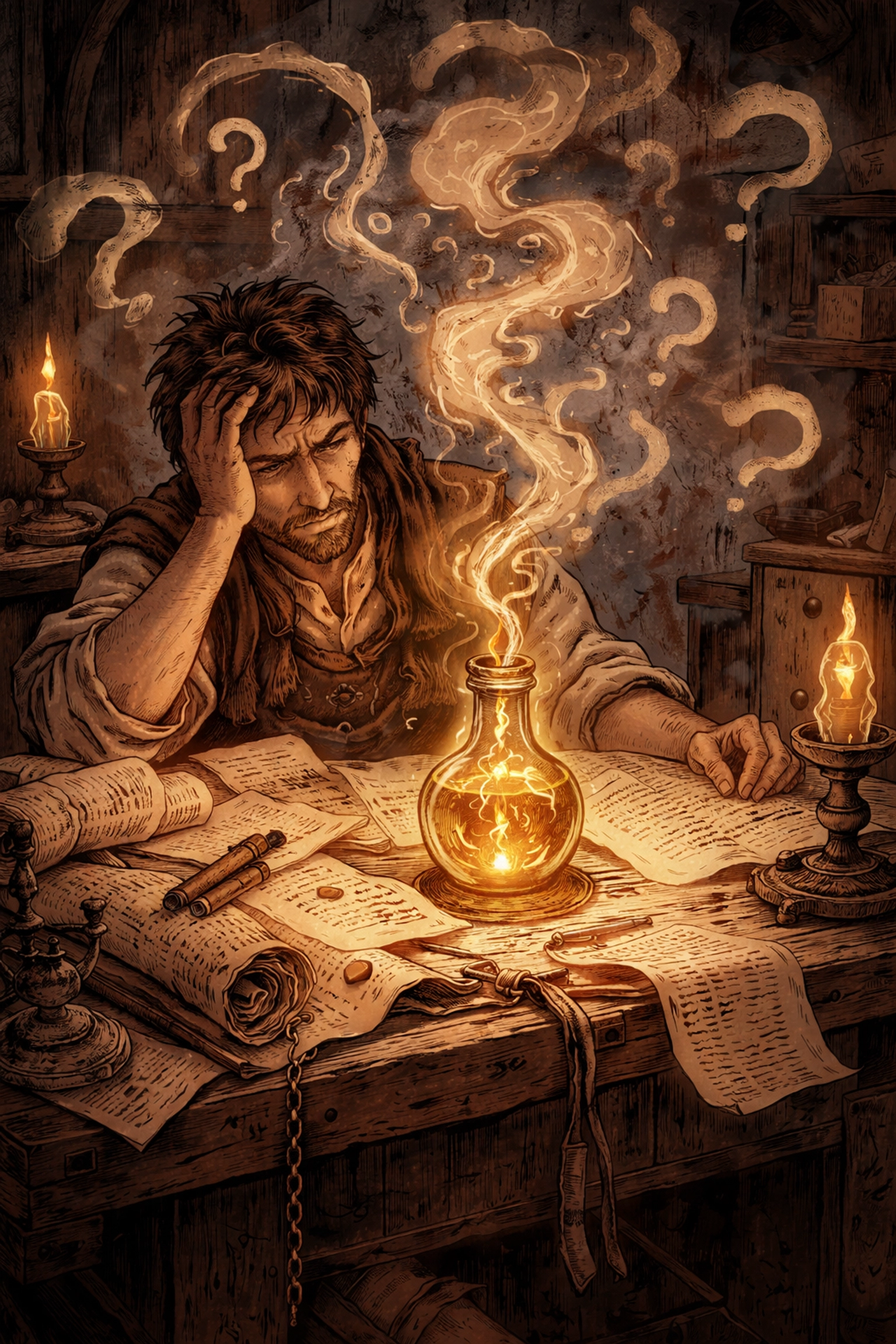
This is where it gets frustrating. Most fragrance oil manufacturers don't list their full ingredient breakdowns. They'll tell you it's "phthalate-free" or "skin safe" or whatever buzzwords are trending, but the actual composition? That's proprietary information.
I spent hours: and I mean hours, because hyperfocus is a thing: trying to track down what was actually in these oils. I emailed suppliers. I read safety data sheets (which tell you hazard information but not necessarily every component). I dug through forums where other candlemakers were asking the same questions.
The answers were vague at best. "A blend of natural and synthetic aromatic compounds." Cool. Super helpful. Definitely tells me whether there's myrrh and frankincense in there with my dragon's blood (read my dripping sarcasm).
Here's what I eventually pieced together: most fragrance oils are complex chemical formulations designed to approximate a scent. They're not the thing itself. They're an interpretation. And those interpretations often include multiple aromatic compounds that might smell like completely different herbs or resins to someone with a trained nose: or, apparently, to someone whose sensory system is dialed up to eleven.
That chemical fuzziness I kept experiencing? Part of it was probably the synthetic carrier compounds. Part of it might have been scent components that didn't belong in what I thought I was buying.
For spiritual and magical work, where intention and ingredient specificity actually matter, this is a huge problem.
Why This Matters For Ritual Candles
Look, if you're burning a candle because it smells nice and makes your living room cozy, fragrance oils are probably fine for you. I'm not here to tell anyone their preferences are wrong. There is a definite art and science to creating and mixing those scents.
But if you're burning a candle as part of a ritual: if the specific energy or scent of frankincense or rose or cedar is part of your working: then you need to actually know what's in your candle. You need that frankincense to be frankincense. Not frankincense-plus-mystery-myrrh-plus-synthetic-compounds-the-manufacturer-won't-disclose. Some ingredients negate the chemical properties that you want to be released into the air when you are burning a substance. I didn't want to add to that level of guess work. I wanted to be able to be completely transparent about my work.
My magically knowledgeable customers could tell the difference. Their noses knew. Their practice knew.
And honestly? My sensory system knew too. It just took me a while to trust it.
So I Stopped Fighting My Brain
This is the part where I made a choice that probably seemed dramatic from the outside but felt like survival from the inside.
I stopped using fragrance oils entirely.
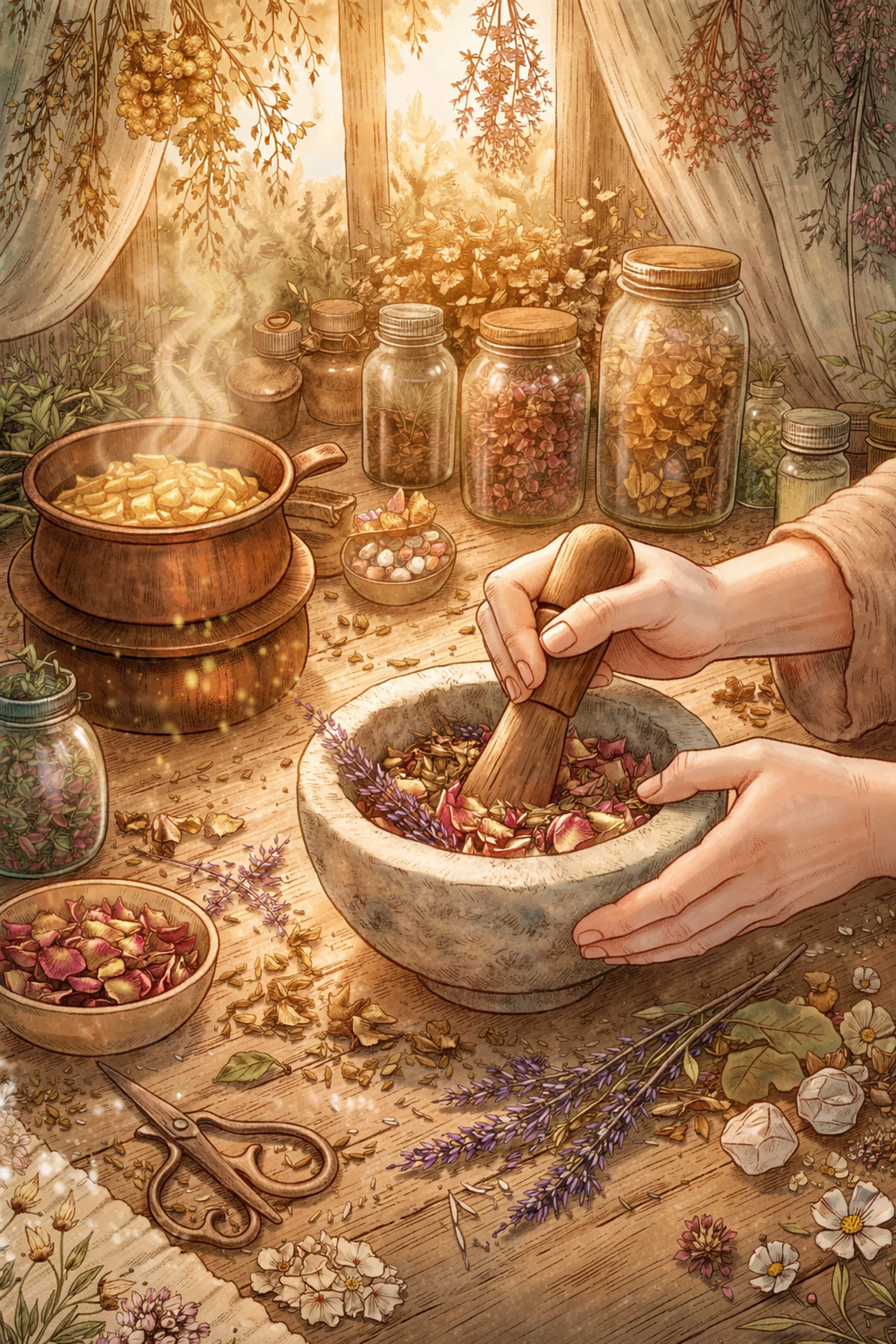
Instead, I went back to basics. Way back. I started working with actual herbs, actual resins, actual botanicals: infusing them directly into beeswax. No synthetic approximations. No mystery ingredients. No chemical fuzziness making my head spin while I tried to work.
Is it more labor-intensive? Absolutely. Do I have to be incredibly careful about safety (which is why I strain everything: check out Behind the Flame if you want the full story on that)? Yes.
But when I smell one of my candles now, I know exactly what's in it. My customers know exactly what's in it. And my sensory system isn't staging a coup every time I pour a batch.
The Unexpected Gift of Sensory Sensitivity
Here's the thing I've learned about being AuDHD in this business: the same sensitivity that makes some things unbearable also makes me really, really good at noticing things that are off.
My brain's inability to tolerate that chemical fuzziness? It led me to a better product. My customers' deep knowledge of magical correspondences? It confirmed what my senses were already telling me.
I couldn't have built Unicorn Fairy Circles the way it exists now if I'd been able to just... ignore the discomfort and use fragrance oils like everyone else. My neurodivergence isn't a quirky personality trait I mention for relatability points. It's genuinely shaped how I make candles and why I make them the way I do.
So yeah. Scent testing days are still a lot. I still have to pace myself, take breaks, step outside for fresh air. But at least now I'm testing things that don't make me want to flee my own home and workspace.
That's the honest truth behind why my candles are different. Not a marketing angle. Just a brain that wouldn't let me do it any other way. ✨
Want to learn more about how I actually make these candles? Head over to Behind the Flame for the nerdy details. Or browse the shop if you're ready to try a candle that's exactly what it says it is.
